Rigorous political analysis for readers who want to understand the system, not just react to it.

Category: Blog (page 8 of 13)

When the Rule-Maker Won’t Obey Its Own Rules: The EU’s Stubborn Internal Pay Gap

EU flags waving in front of a modern building
European institutions must lead by example on pay transparency.

You would think that an institution built on treaties promising equality between women and men would have sorted its own house out by now. The principle of equal pay for equal work has been EU law since the Treaty of Rome. Directive after directive has taken aim at wage discrimination. Yet, here we are. The numbers don’t lie, and they are deeply uncomfortable. I’ve spent years studying how institutions enforce—or fail to enforce—their own rules. The fact that a pay gap survives inside the EU’s corridors isn’t just a minor inconsistency you can dismiss with a shrug. It’s a full-blown test of institutional character, and right now, the EU is failing it.

The European Commission’s own 2023 figures put the gap at about 9.5% for women and men in comparable grades and jobs. Someone might glance at that and say it’s better than the 12.7% average across the Union. Fair enough. But let’s not pat anyone on the back just yet. That 9.5% is a tidy aggregate that masks a messier story: women stacked in lower rungs, a weird opacity around how senior posts get filled, and a quiet tendency to undervalue the kind of work women end up doing. This isn’t fate. It’s the result of specific policies and habits the EU could fix tomorrow. And frankly, should have fixed yesterday.

The Architecture of Institutional Inequity

You can’t get a real picture by squinting at averages alone. A 2021 report from the European Court of Auditors laid it out plainly: women make up 54% of staff across the EU administration, but only 39% of middle management and a paltry 27% of senior management. That pyramid shape is the engine driving the gap. When women are packed into assistant and secretarial grades while men cluster in the higher-paying administrator and leadership bands, a pay gap isn’t a surprise—it’s practically baked into the structure.

Professional woman looking at documents in an office
Women in EU institutions often remain underrepresented in decision-making grades.

This pattern didn’t appear by accident. The EU’s merit-based recruitment, for all its good intentions, has long favoured career paths and selection benchmarks that end up tilting toward men. Take the concours général, the exam for permanent officials. The competencies it tests may sound gender-neutral on paper, but they reward a specific kind of uninterrupted career trajectory—one less common for anyone who has stepped back for caregiving. Then there’s the old expectation that staff can uproot their lives at short notice and work whatever hours are needed. That hits women harder because, across Europe, they still carry the heavier end of unpaid domestic and care work.

The institutions have also dragged their feet on binding fixes. The 2017-2019 Diversity and Inclusion Strategy set some nice aspirational targets for gender balance in management. But the Commission’s own mid-term check-in admitted progress was “uneven and too slow.” By 2022, women in senior management at the Commission had only crawled from 30% to 34%. At that speed, parity won’t arrive until sometime around 2045. For a body that expects member states to move fast and comply hard, this sort of gradualism doesn’t just ring hollow—it clangs.

Transparency as a Disinfectant

One of the strongest tools for closing a pay gap is also the one that meets the stiffest resistance: real, unvarnished pay transparency. The EU Pay Transparency Directive adopted in 2023 will soon push companies across the Union to report their gender pay gaps and give workers a proper route to challenge discrimination. But here’s the twist—the EU institutions themselves aren’t directly covered. They operate under a separate Staff Regulations framework. So the EU can legislate transparency for everyone else while keeping a softer standard for its own workforce. That’s not a loophole; it’s a credibility wound waiting to bleed.

To be fair, some steps have been taken. The European Parliament’s Bureau publishes biennial reports on gender equality among staff, and the Commission puts out its own “Gender Equality in the Commission” document. The problem is these reports often lack the detail you’d need to spot pay discrepancies at the level of a specific unit or grade. Bonuses, overtime, allowances—those extras that can quietly widen a gap—are rarely broken out. On principle, the EU should be holding itself to the same bright light it shines on member states. Anything short of that chips away at its moral standing.

Glass ceiling concept with a woman reaching upward
Pay gaps often reflect invisible barriers to advancement.

The connection between transparency and accountability isn’t theoretical. In 2019, the European External Action Service started publishing gender-disaggregated promotion statistics. Within two years, the share of women appointed as heads of delegation rose from 22% to 31%. Just shining a light on the data seemed to shift behaviour: managers became warier of bias, and strong female candidates got harder to overlook. The lesson is pretty stark—what gets measured and aired in public tends to get managed.

The Pitfalls of a Meritocracy Myth

I’ve lost count of how many times I’ve heard officials and observers insist that EU recruitment and promotion are pure meritocracy, and any gender imbalance simply reflects differences in ambition, aptitude, or personal preference. That story is attractive because it lets institutions off the hook. But it falls apart the moment you examine it. Research from the European Institute for Gender Equality shows that when women and men enter the same field with identical qualifications and experience, women are paid less—and that gap only grows over a career.

The “personal choice” line also dodges the way institutional environments shape those choices. If a woman looks at a senior role, sees it demands a 60-hour week, and decides she can’t square that with caregiving, that isn’t a free-floating preference. It’s a rational reading of a structural problem. The EU has made some effort to normalise flexible working and parental leave for all genders, but men’s uptake remains low. Until caregiving is genuinely shared and valued, the pay gap will keep functioning as a tax on motherhood and a quiet subsidy for a particular model of a male career.

What a Principled Approach Demands

Fixing the gender pay gap inside EU institutions needs more than cautious tinkering. It calls for a rights-based framework that treats pay equity as a legal and ethical baseline, not a box-ticking diversity exercise. I’d argue for three concrete moves:

  • Binding pay audits with consequences: Every institution and agency should run annual, externally verified pay audits that break down all elements of pay by gender and grade. Where unjustified gaps show up, corrective salary adjustments should be mandatory and retroactive. No exceptions, no delays.
  • Gender-balanced shortlists with teeth: For all management and senior expert posts, selection panels should be required to present gender-balanced shortlists. If a balanced slate isn’t possible, the vacancy gets re-advertised. This is already used in some national public services and speeds up change without diluting standards.
  • Revaluing “women’s work”: A systematic job evaluation should re-examine how roles predominantly held by women—administrative coordination, HR, communications—are graded. The aim is to check whether they’re undervalued next to male-dominated roles carrying similar complexity and responsibility.

These ideas aren’t some fringe manifesto. They line up with the EU’s own 2020-2025 strategic objectives and with recommendations from the European Parliament’s Committee on Women’s Rights and Gender Equality. What’s been absent is political spine and a readiness to hold institutions to the same yardstick they apply to others.

The Cost of Inaction

There’s a quiet cost to the EU’s internal pay gap that isn’t measured in euros. It eats away at trust—among staff who see it as rank hypocrisy, among citizens who expect the institutions to live by the values they broadcast, and among third countries who get lectured on gender equality by a body that doesn’t fully practice it. In a climate thick with Euroscepticism, the Union can’t afford to bleed credibility like this.

The pay gap is also a symptom of something wider: a democratic deficit. If the institutions designing Europe’s future don’t look like its population, the policies they churn out will be narrower for it. Diverse leadership teams tend to make more balanced decisions, consider a broader set of impacts, and stick to higher ethical standards. By holding women back from reaching their full professional potential, the pay gap doesn’t just hurt individuals—it lowers the quality of EU governance.

Frequently Asked Questions

What is the exact size of the gender pay gap in EU institutions?

The most recent data from the European Commission (2023) points to a gender pay gap of roughly 9.5% when comparing women and men in comparable grades and functions. That figure, however, doesn’t capture the full effect of vertical segregation—the underrepresentation of women in higher-paid management jobs. If you look at all staff categories without adjustment, the gap is much wider, reflecting the concentration of women in lower-paying roles.

How does the EU’s internal pay gap compare to member states?

The 9.5% gap inside EU institutions is lower than the EU-wide average of 12.7% (2022 data). But that comparison can mislead. EU institutions are public-sector employers with tightly structured pay scales and strong anti-discrimination rules. With those advantages, the gap ought to be close to zero. That it persists anyway points to deeper cultural and structural issues the EU hasn’t yet tackled.

What can individual staff members do if they suspect pay discrimination?

Under the EU Staff Regulations, officials and other servants can file a complaint with their institution’s appointing authority. If that doesn’t resolve things, they can take the case to the EU Civil Service Tribunal. In reality, few do. The burden of proof is steep, and the process can drag on and turn adversarial. The 2023 Pay Transparency Directive doesn’t directly cover EU staff, but it may build pressure for internal reforms that shift the burden of proof to the employer and strengthen worker protections.

Are there any EU institutions that have achieved gender pay parity?

No EU institution has publicly reported full gender pay parity across all grades and functions. Some agencies, such as the European Institute for Gender Equality and the European Food Safety Authority, have better gender balance in management and smaller gaps, but even they acknowledge ongoing disparities in certain job groups. The European Central Bank has made notable progress through targeted recruitment and retention measures, yet its 2023 report still showed a residual gap of 4.8% in base salaries.

Conclusion

The gender pay gap in EU institutions isn’t a scandal about to explode; it’s a slow, grinding failure of nerve. It lingers because comfortable myths—pure meritocracy, steady progress, good intentions—have been allowed to stand in for hard action. As an analyst, I’m less interested in outrage than in practical repair. The tools are there: binding transparency, accountable recruitment, job revaluation. What’s missing is the political will to use them. The European project was built on a promise of justice and equality. It’s past time for the institutions to actually live that promise—beginning with the women who work inside their own walls.


When the Watchdog Won’t Watch Itself: The Gender Pay Gap Inside EU Institutions

When the Watchdog Won’t Watch Itself: The Gender Pay Gap Inside EU Institutions

European Parliament chamber with empty seats and flags

It’s a quiet scandal, the kind that doesn’t make the front pages. The European Union sets the rules. It tells member states to close their pay gaps, to publish the numbers, to fix the imbalance. Yet inside its own buildings—the Commission, the Parliament, the Council—the numbers tell a different story. Women earn less. Not everywhere, not always in obvious ways, but persistently, structurally. The gap sits somewhere between 10% and 15% when you compare people in the same grade. That figure is tidy enough to file away. But it misses the bigger injury: the way women get funnelled into lower-paid roles in the first place, the way the whole machinery tilts before the first euro hits the bank account.

Dig a little and the data gets uncomfortable. Official staffing tables show women clustered in assistant and secretarial function groups—AST and AST/SC in the EU’s jargon—while men fill the higher-grade administrator posts. The Commission’s own 2023 snapshot had women at 54% of all staff but only 40% of senior management. At Director-General level, the numbers drop further. This isn’t about ambition or aptitude. It’s about a system that, for decades, has quietly rewarded one kind of career path and penalised another.

Structural Segregation: The Architecture of Inequality

Look at the staffing chart and you see a map of old assumptions. The “concours”—the entrance exams that decide who gets in—are formally neutral. In practice, they favour candidates with uninterrupted résumés and very specific kinds of professional experience. Caregiving gaps? They don’t sit well on the application form. The system has long been more forgiving to men, who still carry less of the care load at home. And once you’re in, the wall between the AST and AD tracks is brutal. Moving from assistant to administrator is technically possible; in reality, it’s a rare escape. The result is a largely female workforce locked into roles with a fixed, lower pay ceiling—a glass box, not just a glass ceiling.

Woman working at a desk with EU flag in the background

The whole thing has a mechanical feel to it, as if the architecture itself does the sorting. Recruitment, retention, promotion—each step nudges men upward and women sideways. It’s not a conspiracy. It’s a default setting, and nobody’s been in a hurry to change the factory defaults.

The Care Penalty and Contractual Precarity

Then there’s the motherhood question, which the EU prefers to frame in terms of generous leave policies. On paper, the parental leave provisions look decent. In the life of a career, they exact a price—and it’s women who pay it. Time away slows the accumulation of seniority points. It pushes you past promotion windows. The high-visibility assignments, the ones that get you noticed for the next step up, go to the people who are in the room. In a culture where long hours and permanent availability are silently rewarded—especially in the policy-heavy directorates and cabinet posts—motherhood becomes a quiet penalty.

Contractual status adds another layer. The EU has leaned harder on contract agents and temporary staff over the years, building a two-tier workforce. Women are overrepresented in these non-permanent posts. The pay is lower, the benefits thinner, the job security minimal. Men, meanwhile, are more likely to hold the permanent official positions that come with better scales and real protection. It’s horizontal segregation, and it’s a pay gap by design: the remuneration tables for contract agents are structurally inferior, and everyone in the system knows it.

Opaque Accountability and the Compliance Gap

Here’s the part that should make principled observers angry. The EU adopted a Pay Transparency Directive in 2023. It tells member states to report their gaps, to do joint pay assessments, to act. But EU institutions themselves? They’re not bound by it. They operate under the Staff Regulations—a separate legal order that has, until now, been treated as a kind of sovereign territory. The watchdog writes the rules for everyone else and then exempts its own household.

Close-up of hands reviewing a document with a calculator and pen

This compliance gap is not a technicality. It’s a crack in the foundation. Internal pay gap reports come late, use aggregated data that buries intersectional differences, and carry no binding corrective teeth. The Court of Justice has ruled on individual cases—BV v Commission and others—but systemic litigation is a blunt, slow instrument. Meanwhile, the institutions that monitor member states for equality law infringements have been slow to turn the same scrutiny inward. It’s a double standard, and it gnaws at the EU’s moral authority.

Policy Design Without Proximity

I’ve spoken to women working in these institutions, and there’s a recurring theme: the gender equality strategy looks impressive from the outside. The 2020-2025 document is thorough, the language is right. But on the inside, female staff networks describe a persistent sense that their concerns are managed, not addressed. The Equal Opportunities offices are staffed by committed people, but they lack the power to compel directorates-general to change promotion lists or staffing decisions. Without a binding internal pay transparency mechanism—one that breaks the data down by grade, function group, and contract type—the gap stays abstract. A statistic to be noted, not a wrong to be righted.

Remedies: From Symbolic Parity to Structural Equality

Fixing this means dropping the numbers game. Hitting 50% female representation at management level is fine, but it’s not enough if those women are steered into lower-paid directorates or if their promotion depends on mimicking a male-gendered work rhythm. The remedy has to be structural and principled—the same standard the EU demands of others.

First, amend the Staff Regulations. Bring them into line with the Pay Transparency Directive. That means mandatory annual reporting of gender-disaggregated pay data across every institution, agency, and body, with a breakdown by function group and grade. Where a gap over 5% shows up in any category, a joint pay assessment with staff representatives must follow—on a binding timeline, with a date for closure.

Second, tear down the wall between AST and AD. A standardised, transparent career conversion programme that values competencies over formal qualifications would begin to dismantle the feminised ghetto of assistant roles. Simultaneously, make unconscious bias training mandatory for promotion panels, and require gender-balanced panel composition by statute, not by hope.

Third, revalue care leave. Seniority points and promotion eligibility must be recalibrated so that parental leave doesn’t stall a career. A “care credits” system—counting leave periods as active service for all advancement purposes—would directly attack the motherhood penalty. And a high-level Independent Gender Equality Ombudsman, with real authority to audit, investigate, and issue binding recommendations across all EU institutions, would finally provide the enforcement spine that has been missing for too long.

A Test of Foundational Principles

The gender pay gap inside the EU isn’t a human resources footnote. It’s a direct challenge to the Union’s legal and ethical foundations. Article 157 of the Treaty on the Functioning of the European Union guarantees equal pay for equal work or work of equal value. When the bodies safeguarding that treaty fail to embody it, they hand a corrosive argument to sceptics and to member states that already resist equality directives as outside impositions. Principled governance starts at home. The EU’s legitimacy as a normative power depends on its willingness to submit to the same rigorous standards it sets for the continent. This gap must close—not for the sake of a statistic, but for the integrity of the entire European project.

Frequently Asked Questions

What is the reported gender pay gap in EU institutions?

Aggregate figures from official reports have indicated a controlled gender pay gap of approximately 10% to 15% within the European Commission, though this varies by institution. However, this figure only accounts for differences between men and women in the same grade and does not reflect the far larger disparity caused by vertical segregation, where women are concentrated in lower-paid function groups.

Why are EU institutions not covered by the new Pay Transparency Directive?

The EU institutions operate under a distinct legal framework known as the Staff Regulations, which sets out employment conditions for EU officials and other servants. Historically, this framework has been treated as a separate system, meaning that directives adopted for member states do not automatically apply internally unless the Staff Regulations are explicitly amended to mirror them.

How does the function group system contribute to the pay gap?

The EU civil service is divided into function groups, primarily Administrators (AD) and Assistants (AST). AD posts, which command higher pay, are male-dominated, while AST and secretarial (AST/SC) posts are female-dominated. The difficulty of moving from one function group to another locks many women into lower pay scales for their entire careers, creating a structural pay gap that goes beyond individual discrimination.

What practical steps can close the internal pay gap?

Key measures include amending the Staff Regulations to require full pay transparency reporting, creating a binding career conversion programme between AST and AD groups, introducing care credits to neutralise the career impact of parental leave for promotion and seniority, and establishing an independent ombudsman with enforcement powers over all EU institutions.

When the Standard-Bearer Stumbles: The EU Institutions’ Own Gender Pay Gap

European Union flags outside the Berlaymont building in Brussels

Walk through the Berlaymont on a grey Brussels morning, past the security checks and the laminated passes, and you’ll sense it: a quiet, institutional self-belief that the European project is a moral enterprise. The treaties say it out loud—equal pay for equal work. They’ve been saying it since the Rome days. So why, in the very buildings where those words get turned into directives and country-specific recommendations, does a woman’s payslip still lag behind a man’s? It’s not a stray anomaly. It’s a contradiction that gnaws at the Union’s external voice and, more intimately, at the trust of the people who keep the place running. I’ve spent twenty years picking apart public-sector labour equity, and what I see in Brussels and Luxembourg is institutional dissonance—values on paper, a different story in the payroll run.

The latest numbers from the Commission, the Parliament, and the Council put the gap somewhere between 7% and 12%. Officials often wave this away by pointing to the wider private-sector figure—around 13% last time I checked—and calling it progress. That’s a deflection, plain and simple. The EU institutions are not a run-of-the-mill employer. They are the normative model. When the model itself leaks, it’s not a minor compliance hiccup. It’s a failure of structural will. The legal instruments are already there. What’s missing is the willingness to turn the instruments inward.

The Architecture of Inequality: Beyond Base Salaries

At first glance, the salary scales look spotless. Gender-neutral, transparent, published in the Official Journal. If only the story stopped there. The actual drivers sit deeper, in the pattern of who ends up where. Call it vertical segregation: women cluster in the lower function groups, and they thin out dramatically as you climb the grades. Across most EU bodies, women make up more than half the workforce, yet their share of senior management posts remains stubbornly low. The Commission managed 37% in 2023—barely different from a decade ago. At director-general level, you’re looking at an even smaller slice.

This isn’t some unfortunate accident. Recruitment and promotion systems that claim to be merit-based keep rewarding career paths that men tread more easily. Secondments from national administrations carry weight. So do unbroken service records—try maintaining one of those if you’ve taken time out for care. And then there are the informal networks, the pre-selection chats that never appear in any audit trail. Formal audits, in any case, hunt for explicit discrimination. They’re not built to catch the slow, procedural tilt that, year after year, produces a male-heavy top tier.

A woman working at a desk in a modern office with EU materials

The Allowance and Bonus Divide

Then you hit the murkier territory of allowances and bonuses. Expatriation allowances, household allowances, dependent child benefits—all designed, in principle, to level the field regardless of nationality. In practice, they lean on assumptions about family life that haven’t aged well. The household allowance, for instance, usually goes to the staff member who is the primary earner. Most of the time, that’s still a man. The dependent child allowance? More often claimed by male staff, because female staff are likelier to be in dual-career households where their partner already claims something similar. The system doesn’t intend to discriminate, but it ends up reinforcing the old single-earner template.

Performance bonuses and accelerated promotions add another layer of distortion. Look at the European Parliament’s own studies: male staff get put forward for exceptional advancement more frequently, even when their performance scores are no higher. The culprit seems to be that slippery word “potential.” How do you measure potential? You end up measuring confidence, availability for late-evening files, a certain style of self-promotion—criteria that are saturated with gendered assumptions about commitment and leadership. Over a full career, the compounding effect is brutal. Men often start higher and then rise faster. The gap doesn’t just persist; it widens.

The Cost of Institutional Hypocrisy

There’s a political price tag here, and it travels well beyond the European Quarter. When the Commission fires off a recommendation to a member state on gender equality, or when the Parliament adopts a resolution blasting pay discrimination in the private sector, the awkward question hangs in the air: and what about your own house? Third-country officials have raised it in trade talks. Civil society groups cite it in shadow reports. The EU’s external credibility on gender equality runs on a simple engine: its internal record. Right now, that engine sputters.

The institutions also pay a material cost. A persistent pay gap pushes skilled women out—often at mid-career, precisely when their institutional knowledge is at its peak. When they leave because progression has stalled or the atmosphere feels rigged, the loss is real. Recruitment in the EU system is slow and expensive. High turnover among experienced female staff is not just unfair; it’s an operational inefficiency that any decently run organisation would scramble to fix.

The Legal Framework and Its Limits

The Staff Regulations forbid sex discrimination. The Court of Justice has backed the direct effect of equal pay rules. So far, so solid. But the burden of proof in a pay-discrimination case is a heavy lift. An individual staff member has to show that her situation is comparable to a higher-paid male colleague’s. To do that, she needs pay data—real, granular pay data—that the institutions do not systematically publish. The official line is that anonymised aggregate figures are enough. Legally defensible? Maybe. Ethically sufficient? Not even close. Transparency isn’t a bureaucratic nuisance. It’s the precondition for accountability. Without it, the gap remains an abstraction, and staff are left trying to challenge a system while the system holds all the numbers.

People walking through a modern glass building interior in Brussels

A Principled Path Forward

Fixing this isn’t about tweaking a few HR circulars. It’s about rethinking how the institutions value work, assess merit, and let careers unfold. The steps below aren’t exhaustive—they’re the floor, the minimum a self-declared equality champion should be standing on.

First, publish the data—properly. Every institution should put out an annual report that breaks down base salary, allowances, and bonuses by gender, function group, and grade. The breakdown needs to be fine-grained enough for intersectional analysis: nationality, family status, the works. Without that, the gap stays a fog, and individual staff can’t get the information they need to mount a challenge.

Second, overhaul recruitment and promotion. The current fixation on uninterrupted service and availability for late-evening work penalises anyone with caring duties—and that’s still disproportionately women. Competency-based assessments that don’t mark down career breaks should be the norm. Selection panels need their gender impact monitored, honestly and regularly. Targets for female representation at senior levels, tied to real timelines, are a necessary interim step. Organic parity sounds lovely, but we’ve been waiting a while.

Third, rewire the allowances system. Stop tying allowances to the assumption of a single-earner household. Move to individualised entitlements: every staff member gets the same base allowance irrespective of their household setup. The cost? Minimal, compared to the institutional damage the current model keeps doing.

Fourth, create an independent oversight body. Internal complaint procedures are not enough. An external ombudsperson—someone with the teeth to investigate systemic pay disparities and issue binding recommendations—would bring the accountability that’s missing now. This office needs unfettered access to the data and the power to launch its own inquiries.

FAQ: Understanding the Gender Pay Gap in EU Institutions

Why does a gender pay gap exist in EU institutions if they have strict non-discrimination rules?

Because the rules block explicit bias, but the gap feeds on structure. Women are under-represented in senior grades and over-represented in support roles. Promotion rhythms, the way allowances are handed out, and the quiet power of informal networks all stack the deck—slowly, legally, and largely invisibly. This isn’t about unequal pay for the same job. It’s about unequal access to the better-paid jobs and the extras that come with them.

How does the EU institutions’ pay gap compare to the private sector?

In raw percentage terms, it’s smaller—7–12% against an EU average around 13%. But that comparison is a distraction. The EU institutions are a public authority with a treaty-level duty to promote equality. The right benchmark isn’t a company’s HR report. It’s the standard the Union demands of others. A persistent gap of any size means that standard isn’t being met at home.

What can individual staff members do if they suspect pay discrimination?

They can file a complaint under Article 90 of the Staff Regulations and, if needed, take the case to the EU Civil Service Tribunal. The process is heavy, slow, and requires evidence that is often impossible to gather without institutional openness. Staff associations have pushed for class-action mechanisms and a shift in the burden of proof, but those reforms haven’t landed. For now, the most effective lever is collective pressure—through unions, through staff representation, through public advocacy that makes the gap too uncomfortable to ignore.

Are there any recent positive developments?

A few directorates-general have drawn up voluntary gender equality plans with management targets, and the European Parliament has tested a pay transparency tool for its own Secretariat. These are pockets of good intent, but they’re fragmented and carry no binding force. The 2024 pay transparency directive, once transposed, will bind member states—but not the EU institutions themselves. So we’re left with the odd spectacle of a legislator that isn’t covered by its own law.

The gender pay gap inside the EU institutions is, at bottom, a test of character. It asks whether the Union can stomach the same scrutiny it turns on others. So far, the answer has been a diplomatic mumble. The technical fixes are sitting on the shelf. The legal hooks are there. What’s been missing is the political nerve to treat internal inequality as a breach of institutional integrity. That nerve has to come from the top, and it has to last. The women who run the European project day in, day out, deserve exactly what that project claims to stand for.

When the Watchdog Looks Away: The EU’s Own Gender Pay Gap

Brussels runs on a paradox. The European Union’s founding documents read like a promise—equality between women and men isn’t an afterthought, it’s treaty-level bedrock. And yet, inside the Berlaymont, the Justus Lipsius, and the glass-and-steel warrens of the Parliament, the payroll tells a messier story. For years I’ve tracked how policy lands in practice, and the stubborn little gap in EU institutions’ own salary data feels less like a glitch and more like a quiet betrayal of first principles. This isn’t a scandalous chasm; it’s a slow, bureaucratic tilt—built into grade structures, promotion habits, and the unspoken rules of who gets noticed. It needs a proper, evidence-first reckoning.

Professional women in a modern office setting discussing documents

What the Numbers Actually Whisper

The Commission’s own staff reports show a gap that’s narrowing but refuses to vanish. The unadjusted figure—the blunt difference in average gross hourly pay—sits somewhere near 10% across institutions. Dig a layer deeper and that clean number splinters. In the Parliament’s latest diversity snapshot, women cluster in the lower AST grades while the AD 12-and-above club stays stubbornly male. This isn’t about unequal pay for identical work—the Staff Regulations ban that outright. It’s vertical segregation, plain and simple: the top rungs remain harder to reach.

Then there’s the sideways drift. Communication, HR, administrative support—departments that hum with women’s voices. Cybersecurity, economic modelling, the operational nerve centres—still heavily male. And those latter roles? They often come with special allowances or speedier promotion tracks. Nobody sits down and plans it this way. But recruitment patterns, the subtle nudges of institutional culture, and the signals that whisper “this path is for you” start shaping careers from day one of an EU contract.

Diverse group of professionals collaborating around a table with laptops and papers

The Machinery That Keeps It Spinning

If we’re serious about fixing this, we have to stop staring at the dashboard and pop the hood. The EU’s recruitment engine is merit-based and impressively transparent—but not outcome-neutral. The concours system, with its rigid educational profiles and test batteries, can quietly favour the very fields where men have long dominated. And the whole notion of a “linear career” inside the institutions assumes an unbroken timeline. It doesn’t blink at caregiving detours that still land, disproportionately, on women’s shoulders.

The Promotion Logjam

Promotions here run on a mix of seniority, annual appraisals, and a nudge from the hierarchy. The Court of Auditors has been politely pointing out for years that evaluation systems don’t guard well against implicit bias. When mostly male managers size up candidates, a pattern creeps in: women get rated high on collegiality and communication, men on “leadership” and “strategic vision”—exactly the criteria that tip promotion panels. It’s rarely blatant. It’s just the slow grinding of assumptions about who looks like a future director.

The Allowance Gap Nobody Names

Base pay tells only half the story. A fat slice of compensation in the EU bubble comes from allowances—expatriation, household, dependent child. The rules sound gender-blind, but the effects aren’t. Take the household allowance: if a dual-career couple moves for a posting and the woman is the trailing partner, she’s often not the one claiming it. That trims her effective take-home pay. Over a thirty-year career, these little financial asymmetries compound into a serious lifetime earnings dent.

Focused female professional working at a desk with multiple monitors displaying data

Well-Meaning Plans, Patchy Results

Nobody can say the EU has been asleep. The 2020–2025 gender equality strategy set ambitious bars, and every institution rolled out an action plan. The Commission aimed for 50% women in middle and senior management by end-2024; its latest HR report says they’ve nearly hit it for first-time appointments—less so for the overall top-post picture. The Parliament and Council have cycled staff through unconscious-bias workshops and mentorship schemes. These aren’t useless. But they’re dressing on a wound that needs surgery, because they tackle the symptoms, not the source of the problem.

A principled critique has to admit that most of these efforts lack teeth. Targets aren’t quotas—they’re hopes with a date stamp, easy to abandon when the political weather shifts. And look where the burden lands: on individual women, told to network harder, train smarter, advocate louder. The uneven playing field stays untouched. A rigorous fix demands structural recalibration, not yet another empowerment seminar.

The Transparency Directive’s Ghost

The EU’s 2023 Pay Transparency Directive applies to member states and the private sector, but its shadow falls squarely on the institutions. It requires pay-gap reporting, joint assessments when gaps top 5%, and a ban on asking about salary history during hiring. The EU institutions are not legally bound by it—and that’s exactly the problem. How can the Commission rap a member state’s knuckles for opaque pay if its own house won’t meet the same standard? Right now, salary data by gender and grade appears annually. We need something far more granular: breakdowns by function, by years of experience, by allowance type. That’s where the widest fissures hide.

A Serious Roadmap, Not Another Press Release

Closing the gap inside the EU’s own corridors needs three hard-headed moves: transparency that bites, structural redesign, and genuine accountability. First, publish fully disaggregated pay data—every component of remuneration—in a format citizens and staff can actually interrogate. Let the Court of Auditors audit it, with binding recommendations, not polite suggestions.

Second, gut the gendered pathways in recruitment and promotion. Revamp competency frameworks so they value more than one leadership style. Make every selection panel gender-balanced and rigorously trained in debiasing. Slip a “blind” phase into initial screening. And commission a cold-eyed review of the concours: does its design systematically favour certain profiles? Could alternative qualification routes widen the intake without diluting merit?

Third, shift the culture. The institutions still run on an unspoken assumption of round-the-clock availability. Normalise flexible working for everyone—men included—and back it with strong nudges for fathers to take parental leave. The policies are already generous on paper; the missing piece is making uptake routine. This isn’t a “women’s concern.” It’s an effectiveness crisis. When half the workforce faces structural drag, the whole machine underperforms.

Frequently Asked Questions

Is the gender pay gap in EU institutions illegal under EU law?

Direct pay discrimination violates the Staff Regulations, full stop. The gap that lingers is mostly indirect: occupational segregation, uneven promotion access—practices that aren’t designed to discriminate but produce discriminatory outcomes. That makes it harder to litigate, but it’s exactly what the equal-treatment directives push member states to fix through proactive measures. The institutions should be the model, not the exception.

How does the pay gap in EU institutions compare to the private sector?

At roughly 10%, the unadjusted institutional gap sits below the EU private-sector average (12.7% in the latest Eurostat figures). But given the explicit equality mandate and the fiercely competitive recruitment, even a 10% gap is a policy failure. The public sector ought to set the pace, not just echo society’s broader inequalities.

What can individual staff members do to address pay inequity?

Staff can push through their committees and unions, which negotiate working conditions. They can demand transparency from HR on grade distributions and promotion criteria. And they can quietly but firmly challenge the norm that equates long hours with dedication—by visibly using flexible work policies, and encouraging male colleagues to do the same. Real change, though, takes collective pressure and leadership that stays focused.

Are there legal requirements for EU institutions to report on the pay gap?

Not yet—at least not in the binding, standardised way the Pay Transparency Directive imposes on member states. Institutions currently fold gender and pay data into annual HR reports, but the methodology varies. The European Ombudsman has called repeatedly for tougher internal reporting duties. The upcoming Staff Regulations review is the moment to hard-code those requirements.

The gender pay gap inside the EU’s own walls is a test of institutional honesty. It asks whether the Union can swallow the medicine it prescribes to everyone else. A principled, rigorous approach doesn’t clap for incremental tweaks or symbolic wins. It demands precise diagnosis, transparent numbers, and structural remedies. Only by closing this gap can the EU’s institutions honestly claim to embody the equality they’re meant to defend across the continent.

The Gender Pay Gap in EU Institutions: Structural Failures and the Path to Accountability

When the European Commission publishes its annual reports on gender equality, it speaks with justified pride about the Union’s legislative framework. The principle of equal pay for equal work has been enshrined in the Treaties since the Treaty of Rome in 1957. Yet within the very institutions that guard this principle, a persistent and documented pay gap between women and men continues to raise fundamental questions about institutional credibility and political will.

European institution office corridor with glass doors

The Uncomfortable Numbers

The most recent available data from the European Court of Auditors and internal institutional reports confirm what many have suspected: women working within EU institutions earn less than their male counterparts. The gap varies by institution, grade, and contract type, but the aggregate figure hovers around 4 to 5 percent when comparing average salaries across all staff. This figure, while smaller than the EU-wide average of roughly 13 percent, remains indefensible in institutions that claim to lead by example.

These averages, however, obscure deeper disparities. When one examines the distribution of women and men across grade levels, the picture becomes far more troubling. Women remain significantly underrepresented in the highest-paying grades. In the European Commission, for instance, women hold a disproportionately small share of senior management positions, despite representing a majority of the overall workforce. The concentration of women in lower-grade administrative and clerical roles depresses their average earnings relative to male colleagues who occupy senior advisor, head of unit, and director-level positions in greater numbers.

Structural, Not Incidental

It is tempting to attribute the pay gap within EU institutions to individual choices—career interruptions, part-time work preferences, or self-selection out of competitive promotion processes. This framing is both insufficient and intellectually dishonest. The structural features of EU institutional employment create and reinforce gendered outcomes regardless of individual merit or ambition.

Promotion Pathways and the Glass Ceiling

The EU staff regulations establish a formal system of competitions, probation periods, and promotion procedures that appear, on their face, to be gender-neutral. In practice, several mechanisms produce gendered results. Promotion to senior positions often depends on managerial recommendations and performance assessments that are subject to implicit bias. Research from the European Institute for Gender Equality has documented how evaluation criteria in institutional settings tend to reward behaviors more commonly associated with masculine leadership styles—assertiveness, visibility, and self-promotion—while undervaluing collaborative competence and quiet diligence.

Professional woman working at desk with documents

The phenomenon known as the “glass ceiling” is not a metaphor within EU institutions; it is a measurable statistical reality. Women who enter the institutions through the standard concours pathway face a promotion trajectory that slows considerably at the point where administrative roles transition to managerial ones. At each threshold grade, the proportion of women candidates declines relative to men, not because women lack qualifications, but because the selection environment systematically disadvantages them.

Contract Types and Precarious Employment

The EU institutions increasingly rely on contract agents, temporary staff, and seconded national experts to fulfill operational needs. Women are overrepresented in precarious contract categories and underrepresented among permanent officials. Contract agents earn less, receive fewer benefits, and lack the job security that enables long-term career investment. This dual labor market within the institutions reproduces the same gendered stratification that the EU rightly condemns in member state labor markets.

Seconded national experts present a different but related problem. These positions, which serve as stepping stones to senior institutional roles, are filled through nominations by member state governments. The demographic composition of these secondments reflects the gender biases of national administrative cultures, meaning that countries with poor records on gender equality in civil services send fewer women into these career-advancing positions.

The Credibility Deficit

The EU’s external credibility on gender equality depends on its internal practices. When the Commission proposes the Pay Transparency Directive or the Parliament debates binding measures to close the gender pay gap across the Union, the moral authority of these interventions is undermined by the institutions’ own failure to achieve parity. This is not merely a public relations problem; it is a problem of democratic legitimacy. The EU claims to represent values of equality and non-discrimination. Those claims must be enacted within the institutional apparatus itself.

The European Court of Auditors noted in its 2020 special report that while the Commission had set targets for gender balance in management, it had consistently failed to meet them. Targets without enforcement mechanisms are aspirational statements, not policy instruments. The absence of binding accountability measures—salary audits, promotion review panels with gender balance requirements, sanctions for departments that consistently fail to promote qualified women—reveals a gap between stated commitment and practical execution.

Meeting room with diverse professionals in discussion

Toward Accountability: Concrete Measures

Addressing the gender pay gap in EU institutions requires moving beyond declarations and voluntary targets. Several concrete measures would constitute genuine progress:

First, mandatory pay audits. Each institution should be required to publish annual disaggregated data on salaries, bonuses, and promotion rates by gender, grade, and contract type. The current level of data opacity makes external scrutiny impossible. Transparency is the precondition for accountability.

Second, reform of promotion procedures. Blind evaluation of written components of promotion dossiers, gender-balanced selection panels, and structured interview protocols should be standard practice across all institutions. Evidence from member states that have implemented such reforms—including my own country, Iceland—demonstrates measurable improvements in gender balance at senior levels.

Third, equal treatment of contract staff. The two-tier employment structure within EU institutions must be reformed. Contract agents performing work of equal value to permanent officials should receive equal pay and equivalent career development opportunities. The current arrangement is not only discriminatory in effect but also economically irrational, as it wastes the talents of a significant portion of the institutional workforce.

Fourth, accountability mechanisms with teeth. Directors-general and heads of cabinet should be evaluated on their record of gender equality in recruitment and promotion. Departments that consistently fail to promote women to senior positions should face budgetary consequences. Without enforcement, targets remain decorative.

The Question of Political Will

The technical solutions to the gender pay gap in EU institutions are well-established and uncontroversial among policy professionals. What is lacking is not knowledge but political will. The institutions are governed by individuals who benefit, directly or indirectly, from the current distribution of positions and pay. Male-dominated leadership structures have little incentive to reform systems that sustain their dominance. This is not a matter of individual malice; it is a matter of structural interest.

The European Parliament, as the only directly elected institution, has a particular responsibility. MEPs should use their oversight powers to demand concrete action from the Commission and the Council. The Parliament’s Committee on Women’s Rights and Gender Equality has produced excellent reports and resolutions. What is needed now is follow-through: parliamentary questions, budgetary pressure, and public accountability hearings that force institutional leadership to answer for their failure to close the pay gap.

Conclusion

The gender pay gap within EU institutions is not an unfortunate anomaly; it is a predictable consequence of structural features that could be reformed if there were sufficient political determination. The institutions that legislate on pay transparency for European citizens owe those citizens the demonstration that they apply the same standards internally. Until they do, the gap between European values and European practice will remain—and it will continue to call the sincerity of those values into question.

Equality is not a slogan to be exported while being compromised at home. It is a principle that must be lived within the institutions that claim to defend it.

FAQ: The Gender Pay Gap in EU Institutions

How is the gender pay gap measured within EU institutions?

The gender pay gap within EU institutions is typically calculated as the percentage difference between the average gross hourly earnings of women and men across all staff categories. This calculation can be performed using unadjusted data—comparing all women to all men regardless of position—or adjusted data, which controls for factors such as grade, contract type, and seniority. The unadjusted gap reveals the full extent of gendered earnings inequality, while the adjusted gap isolates the portion that cannot be explained by observable professional characteristics. Both metrics are necessary for a complete understanding of the problem.

Why is the pay gap in EU institutions smaller than the EU-wide average?

The relatively smaller pay gap within EU institutions reflects the homogenizing effect of standardized salary scales. All officials at the same grade and step receive identical basic salaries, which eliminates the variable pay discrimination found in private-sector labor markets. However, this structural feature masks the distributional problem: women are concentrated in lower grades and in less secure contract categories. The apparent parity of the salary scale conceals the vertical segregation that produces unequal average outcomes.

What role do member states play in perpetuating the institutional pay gap?

Member states influence the gender composition of EU institutional staff through several mechanisms. National civil services nominate seconded national experts, whose demographic profile reflects domestic hiring and promotion practices. Member state governments also exert political pressure on institutional appointments, including senior management positions, where gender balance provisions are routinely circumvented. The responsibility for closing the pay gap therefore extends beyond the institutions themselves to the national governments that supply and select their personnel.

How European Political Parties Fail Women Candidates

When the European Institute for Gender Equality released its most recent data on political representation, the numbers told a story that should shame every major party on the continent. Women hold roughly one-third of parliamentary seats across EU member states, a figure that has barely shifted in a decade. The problem is not a lack of qualified women willing to stand for office. The problem is that political parties — the gatekeepers of democratic candidacy — systematically obstruct, sideline, and undermine women at every stage of the electoral process.

European parliament chamber during a legislative session

The Nomination Gap: Where Failure Begins

Political parties control ballot access in virtually every European democracy. They select candidates, determine list positions, and decide which constituencies receive competitive nominations. This concentration of power makes parties the single most consequential institution determining whether women achieve elected office. Yet party leadership across the ideological spectrum continues to treat gender-balanced nominations as an aspiration rather than a requirement.

The data from the European Institute for Gender Equality’s Gender Statistics Database is unambiguous. In countries without legislated quotas, parties nominate women at rates 15 to 25 percentage points lower than men. Even in states with quota laws, parties exploit loopholes — placing women in unwinnable list positions or running them in districts the party has no realistic chance of winning. The letter of compliance replaces genuine commitment.

Consider the pattern: a party announces a gender-balanced slate, then places women candidates at the bottom of closed lists, ensuring few will actually take seats. This is not an accident. It is a calculated strategy that allows party leadership to claim progressive credentials while preserving male dominance in parliamentary delegations. When confronted, party officials cite “merit” or “electoral reality” — arguments that invariably protect incumbents, who are disproportionately men.

Structural Barriers Within Party Organizations

Informal Networks and Candidate Selection

Candidate selection in most European parties operates through informal networks that predate women’s entry into institutional politics. Selection committees, constituency chairs, and party executives are overwhelmingly male. These bodies rely on personal relationships, established reputations, and unwritten criteria that systematically disadvantage newcomers — a category that includes most women seeking nomination.

The selection process itself is often opaque. Meetings happen at hours incompatible with caregiving responsibilities. Criteria shift depending on who is applying. Incumbent male MPs receive automatic re-nomination, while women must prove electoral viability without ever having held office. The playing field is not merely uneven; it is designed to preserve existing power arrangements.

Women engaged in political discussion at a conference table

The Incumbency Fortress

Incumbency remains the strongest predictor of re-nomination. Since sitting MPs are predominantly men, this creates a self-perpetuating cycle. Women must wait for retirements, defeats, or newly created constituencies to access winnable seats — events that occur infrequently and unpredictably. Parties that could break this cycle by declining to re-nominate underperforming incumbents instead choose convenience over justice.

The Winnable Seat Problem

Nomination means nothing without placement. A woman nominated in a district her party has never carried, or placed at position forty on a closed list where only the top twenty are elected, has been set up to fail. Parties know this. The practice of directing women toward losing campaigns while reserving competitive seats for men is well-documented across European democracies.

Analysis of multiple national elections reveals the pattern clearly. In systems using party lists, women appear disproportionately in list positions below the threshold for election. In majoritarian systems, parties select women as candidates in safe opposition seats or marginal constituencies. When women do achieve office, it is often through by-elections or appointment rather than through the standard nomination pathway that male colleagues navigate.

This allocation of winnable seats reflects a fundamental lack of investment in women’s candidacies. Parties treat male candidates as investments and women candidates as gestures — symbolic concessions to modernity that require no genuine redistribution of political opportunity.

Funding Disparities

Campaign finance represents another dimension of institutional failure. Parties distribute resources unevenly between candidates, directing larger sums to male aspirants who are perceived as more electable — a perception rooted in past patterns of male dominance rather than demonstrated capacity. Women candidates receive less party financial support, less access to donor networks, and less assistance with campaign infrastructure.

The consequences extend beyond individual races. Women who run underfunded campaigns lose, and those losses are then cited as evidence that women are less electable, justifying further resource deprivation in subsequent elections. This circular logic protects male candidates from competition while depriving parties and voters of capable representatives.

Political debate between candidates at a public forum

Cultural and Institutional Resistance

Party culture reinforces these structural failures. Women who seek nomination face scrutiny that male candidates never encounter: questions about family commitments, electability concerns tied to gender, and expectations that they justify their presence rather than demonstrate their qualifications. Local party associations, which control nominations in many systems, often view women candidates as risks rather than assets.

The OSCE’s handbook on women’s political participation documents these barriers across member states. The patterns are consistent regardless of party ideology. Left, right, and center — all reproduce gender hierarchies within their own organizations while claiming commitment to equality in their public platforms.

Harassment and intimidation compound these problems. Women who do secure nomination face disproportionate attacks — from opponents, from media, and from within their own parties. The failure to protect women candidates from gendered violence and abuse constitutes an additional institutional breach, one that drives women out of politics and discourages others from entering.

What Accountability Looks Like

Voluntary commitments have failed. Parties that promise gender balance without binding mechanisms deliver imbalance. The solution requires enforceable standards: legislated quotas with sanctions for non-compliance, transparent candidate selection processes, mandatory publication of nomination and funding data disaggregated by gender, and genuine investment in women’s campaign capacity.

Some European democracies point the way forward. Spain’s gender parity law, requiring parties to present candidate lists with equal numbers of men and women, has produced measurable gains. Belgium’s Siena Act imposes financial penalties on parties that fail to meet gender balance requirements. These models demonstrate that progress is possible when parties face real consequences for continued exclusion.

Enforcement must address list placement, not merely list composition. Quotas that produce balanced candidate slates while concentrating women in losing positions are meaningless. Effective regulation requires both nomination parity and placement parity — women must appear in winnable positions at rates equal to men.

Parties must also reform their internal processes. Open candidate selection, transparent criteria, published shortlists, and mandatory diversity requirements for selection committees would reduce the informal discrimination that currently pervades nomination decisions. Financial transparency — revealing how party resources are distributed among candidates — would expose the funding gaps that undermine women’s campaigns.

European democracy cannot claim legitimacy while half its population faces systematic exclusion from representative office. Political parties created this problem. They must be compelled to solve it.

Frequently Asked Questions

Why do voluntary party quotas fail to produce equal representation?

Voluntary quotas lack enforcement mechanisms. Parties can adopt gender targets without specifying list placement, candidate quality, or resource allocation. Without sanctions for non-compliance, quotas become performative — allowing parties to claim commitment to equality while continuing practices that disadvantage women. Only legislated quotas with binding consequences produce consistent improvement.

Do gender quotas reduce the quality of candidates?

No. Research consistently shows that quotas do not lower candidate quality. This question itself reflects gendered assumptions — the implicit suggestion that women selected through quotas are less competent than men selected through informal networks. In reality, quotas expand the pool of qualified candidates by breaking open closed selection systems that privileged personal connections over capability.

Which European countries have achieved genuine parity in elected office?

No European country has achieved full gender parity in its national legislature. Sweden and Finland approach parity, with women holding roughly 46 percent of parliamentary seats, but even these leaders fall short. Countries without enforced quota systems — including France, despite its parity law — continue to lag significantly. The pattern is clear: without binding, enforceable mechanisms, progress stalls well short of equality.

The 2025 German Election and Europe’s Quiet Realignment: Why American Politics Can’t Ignore What Happened in Berlin

Germany’s Rightward Lurch Signals Deeper Structural Problems

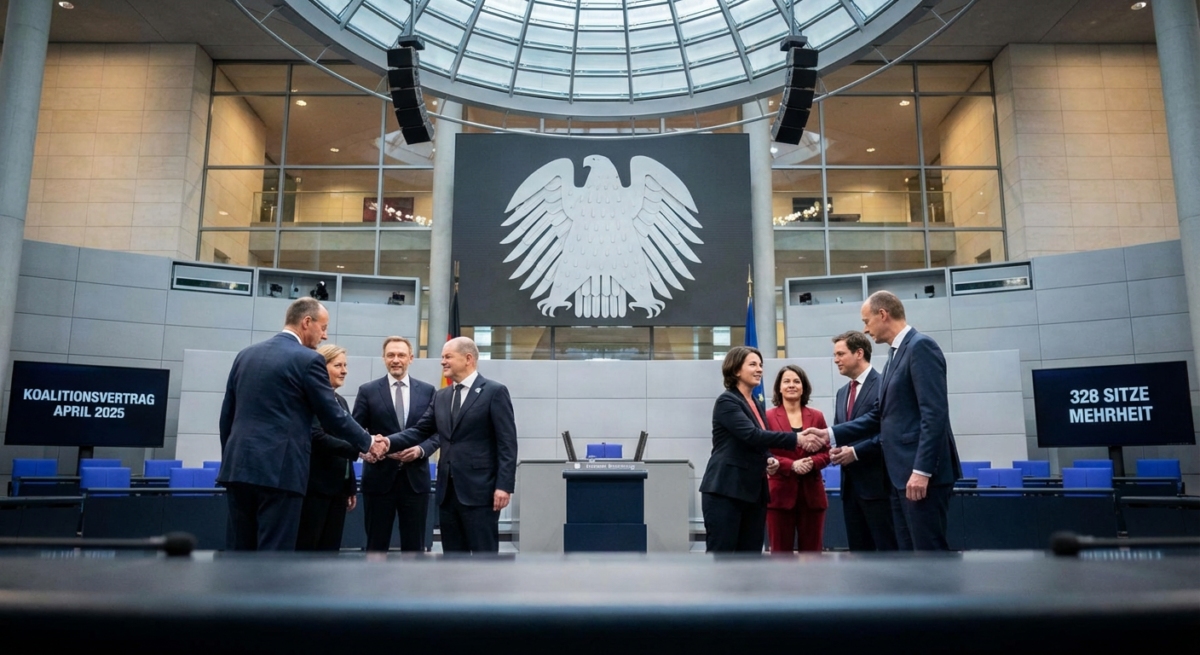
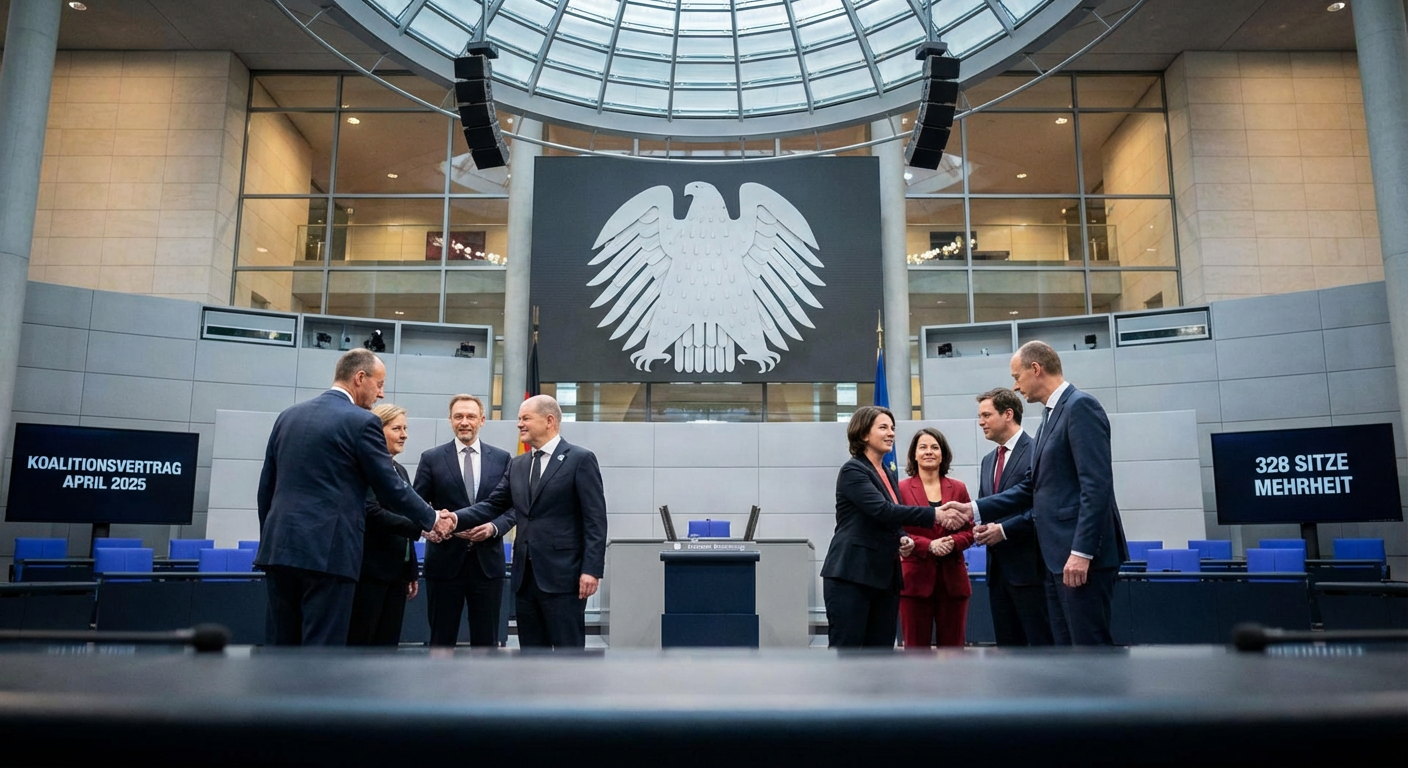
Friedrich Merz is now Chancellor of Germany, and that simple fact masks a far more complicated crisis beneath it. The CDU/CSU won February’s federal election with 28.6 percent of the vote, a respectable but hardly dominant result. The real story lies in what happened everywhere else. The AfD, Germany’s far-right party, claimed second place with 20.8 percent—its strongest federal result ever. The SPD crashed to 16.4 percent, its worst performance since 1945. This wasn’t a normal election correction. It was a structural realignment.

The 2025 German Election and Europe's Quiet Realignment: Why American Politics Can't Ignore What Happened in Berlin
The 2025 German Election and Europe’s Quiet Realignment: Why American Politics Can’t Ignore What Happened in Berlin

Americans watching this unfold should recognize what’s actually happening: German voters weren’t choosing a new policy direction so much as they were voting in panic. The AfD’s surge didn’t emerge from nowhere. It grew from years of stagnant wages, manufacturing anxiety, energy price shocks tied to the Ukraine war, and a sense that established parties had lost control of events. The SPD didn’t collapse because Germans suddenly hated social democracy. It collapsed because the party in government had to implement unpopular choices—higher energy costs, defense spending commitments, integration pressures—and voters punished them for it.

Here’s what makes this consequential for American observers: Germany’s political upheaval is fundamentally about economic anxiety channeling into anti-establishment movements. That’s not unique to Germany. It rhymes with what we’ve watched happen repeatedly in American politics over the past decade. When voters feel economically threatened and believe their government can’t deliver solutions, they gravitate toward outsiders and protest parties. Germany is simply further along that trajectory right now.

The Money Question: Why Defense Spending Became the Real Election

The 2025 German election was ostensibly about economic recovery and immigration. In reality, it was about money—specifically, how much Germany would spend on its military and infrastructure, and who would bear those costs. This is where understanding political economy becomes essential for anyone trying to grasp European politics.

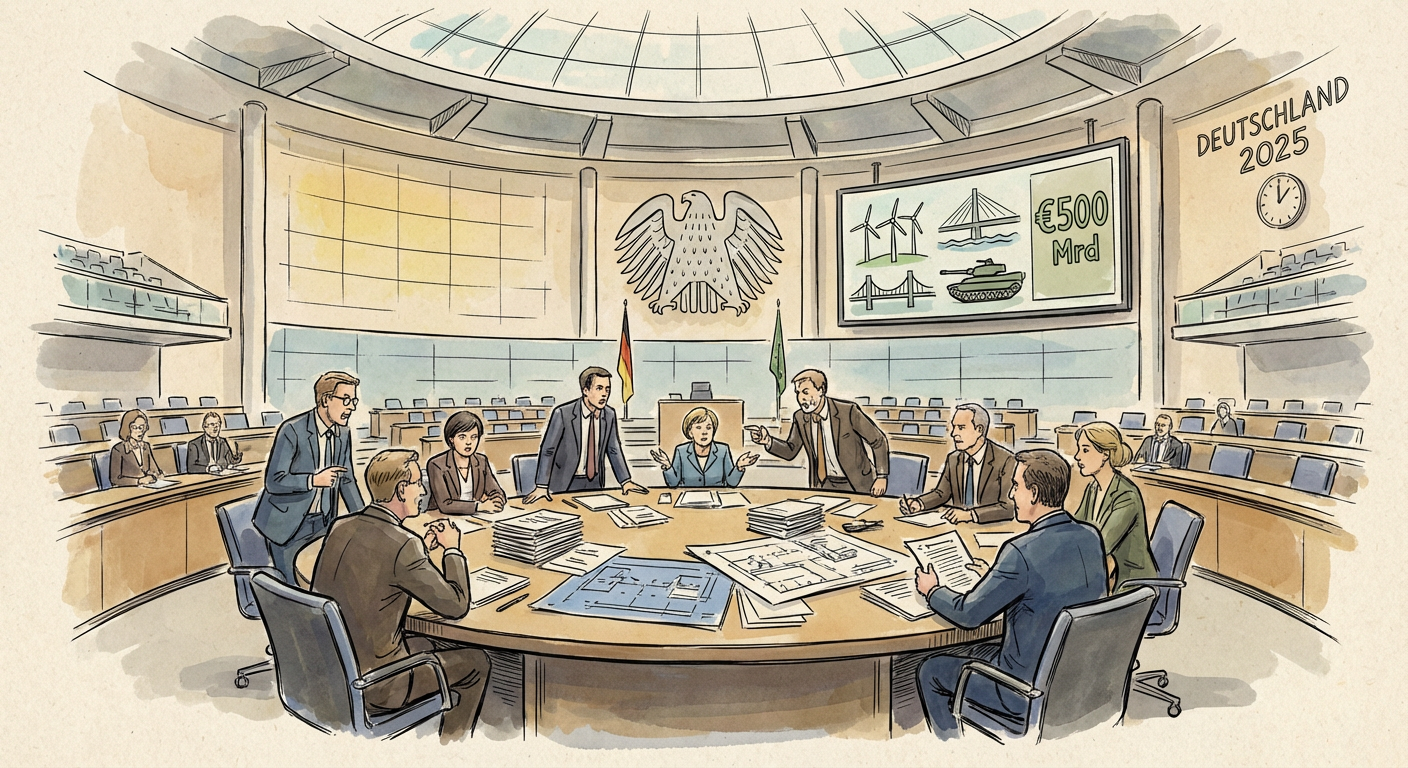
Germany had long committed to the NATO 2 percent defense spending threshold, a commitment born partly from American pressure. For years, Berlin treated this as aspirational rather than mandatory. Then Russia invaded Ukraine, energy prices spiked, and suddenly the defense number wasn’t theoretical anymore. In early 2025, the incoming Merz-led coalition debated a €500 billion infrastructure and defense investment fund. This wasn’t abstract policymaking. This was deciding whether German retirees would accept smaller pension increases, whether workers would see real wage growth, or whether business investment would be crowded out by government borrowing.

The coalition agreed to exceed the 2 percent NATO commitment for the first time. That sounds straightforward until you ask: where does the money come from? Politico Europe’s analysis of the Merz coalition detailed exactly how contentious this proved during negotiations. The SPD wanted to fund defense through tax increases on top earners and corporations. The CDU/CSU wanted to borrow more while maintaining lower taxes. This wasn’t an ideological debate about whether to strengthen NATO. It was a battle over whose income statement absorbed the costs.

Why should Americans care? Because this dynamic—military commitments requiring domestic fiscal choices that create political losers—is about to become central to American foreign policy conversations too. If Germany struggles with the political economy of higher defense spending, imagine the American debate when similar trade-offs emerge.

The AfD Problem Nobody Can Solve by Ignoring It

Germany’s mainstream parties faced a problem with no clean solution: the AfD, now representing one in five voters, could not be included in any coalition government because it violated fundamental democratic norms. Yet excluding 20.8 percent of voters from government formation creates its own legitimacy crisis. This is the razor’s edge European democracies are currently balanced on.

The incentives running through this are worth tracing carefully. The AfD gained voters by consistently warning about immigration and economic decline. Those voters felt ignored by existing parties. The existing parties couldn’t include the AfD in coalitions because the AfD had demonstrated genuine authoritarian sympathies and rejected liberal democratic commitments. So mainstream parties locked the AfD out, which vindicated the AfD’s core narrative: the system doesn’t listen to us because we’re not allowed to win. This feedback loop is self-reinforcing.

For American readers, this should trigger recognition. We’ve watched similar dynamics with political outsiders here—the pattern of exclusion creating resentment that strengthens the excluded party’s political base. Germany’s example suggests that simple electoral arithmetic doesn’t resolve this problem. Even with the AfD locked out of coalition negotiations, it remains powerful enough to constrain what coalitions can do. DW’s full 2025 German election results coverage included testimonials from voters who felt unrepresented regardless of which coalition formed. That dissatisfaction won’t evaporate just because a government took office.

What Germany’s Coalition Math Reveals About European Fragmentation

Merz’s coalition had limited options. The SPD, despite its catastrophic result, remained the largest available coalition partner. Alternative coalitions involving the Greens or the FDP were arithmetically possible but politically complicated. Every combination involved trade-offs. The CDU/CSU chose the SPD, which meant accepting some tax increase proposals and slower pension reform. The SPD accepted defense spending increases it had resisted in campaign messaging. Both parties got less of what they wanted.

This is what fragmentation looks like in practice. Germany’s multiparty system forces coalition compromise, which sounds democratic until you realize that voters didn’t choose a coalition—they chose parties, then watched politicians negotiate deals voters didn’t directly approve. The SPD’s voters didn’t vote for a defense spending surge. The CDU’s voters didn’t vote for higher taxes on the wealthy. Yet both outcomes emerged from coalition math. This creates a legitimacy problem distinct from AfD voters feeling excluded. It affects people whose parties actually participated in government.

The European Union watches German coalition dynamics carefully because Germany remains Europe’s economic engine. When German politics become more fragmented and unstable, EU policymaking gets harder. Merz needed to move quickly on infrastructure and defense commitments because delay meant political capital bleeding away. That pressure to move fast affected which EU initiatives got championed and which got delayed.

Why Americans Should Track German Politics Like It’s Their Own

The American political system remains structurally different from Germany’s—we have two parties, not ten, and we elect presidents directly rather than through parliament. But the underlying economic and political pressures creating instability in Germany exist here too. Stagnant wage growth for working-class voters. Rising defense commitments. Fiscal constraints limiting government spending on social priorities. A sense that established institutions aren’t delivering.

Germany’s election showed what can happen when these pressures accumulate without successful policy responses. The SPD wasn’t destroyed because German social democracy is inherently unpopular. It was destroyed because the government in power had to implement unpopular choices and voters punished the people making those decisions. American voters have shown similar patterns multiple times in recent years. The specific mechanics differ, but the underlying political economy is recognizable.

Watch how the Merz government navigates the next two years. Will the €500 billion investment fund actually produce economic growth that improves living standards? Or will it simply mean higher defense budgets and government debt without corresponding wage growth? Will defense spending crowd out investments Germans care more about? These aren’t theoretical questions. They’re tests of whether government can deliver material improvements in voters’ lives. If Merz’s coalition fails this test, the AfD gains legitimacy. If it succeeds, anti-establishment movements lose their opening. The outcome matters for Europe’s stability and, by extension, American interests in a stable Western alliance.

What’s your read on how long the Merz coalition holds together? I’m curious whether you see parallel dynamics in your own country’s politics, or whether Germany’s fragmentation looks genuinely unique from where you’re sitting.

Trump’s Second Term Tariff Architecture: How April 2025’s “Liberation Day” Reshaped Global Trade Alliances

The Architecture: What “Reciprocal Tariffs” Actually Meant

On April 2, 2025, President Trump announced what his administration branded “Liberation Day” – a sweeping tariff package executed through executive authority that immediately reordered global trade flows. The architecture looked deceptively simple on the surface: a baseline 10% tariff on all imports, with country-specific duties climbing as high as 145% on Chinese goods. But that simplicity masked something far more consequential. These were not traditional protective tariffs calibrated by industry or negotiated through Congress. They were reciprocal tariffs, theoretically designed to match whatever duties other nations imposed on American goods, with explicit political discretion built into the calculation. That discretion mattered.

The reciprocal framing deserves scrutiny because it contained internal contradictions that would reshape alliance politics through 2025 and into 2026. The theory was elegant: if Japan taxes American cars at 2.5%, the U.S. would tax Japanese imports at roughly 2.5%. Fairness through symmetry. Except that baseline 10% applied to everything regardless of their actual tariff rates, and the administration retained unilateral authority to adjust rates based on what officials termed “strategic interests” and “security considerations.” Those terms proved capacious. Countries designated as strategic partners faced lower rates. Countries with large trade surpluses faced higher ones. And China faced the ceiling. The 145% duty on Chinese goods reflected both accumulated trade deficit grievance and explicit punishment for intellectual property concerns, though distinguishing economic rationale from political signal became impossible by May.

What made this architecture politically significant was its departure from international trade law norms. Previous administrations had used tariffs too, but typically within frameworks that allowed for negotiation, exemption, or GATT-compliant justifications. Trump’s reciprocal tariff regime asserted executive unilateralism as its operating principle. Congress had delegated emergency authorities decades ago; the administration simply activated them. This bypassed Democratic-controlled legislative negotiations and sent a clear message to trading partners: the rules of the post-World War II trade system no longer constrained American policy.

The Immediate Calculus: Who Paid What and Why

The tariff regime’s real impact unfolded through the incentive structures it created for different constituencies. The Peterson Institute for International Economics modeled the tariff package and found that average American household real income would fall by approximately $2,600 annually if the full regime persisted without negotiation. That figure compressed an uneven distribution: some households and regions faced much larger losses, while others experienced modest effects or even short-term gains. The modeling assumed no retaliation. Once trading partners responded, those household losses would grow larger.

Understanding who bore those costs and who benefited is where the political economy gets interesting. Domestic manufacturers competing against Chinese imports saw tariff protection reduce immediate competition. Steel and aluminum producers could raise prices. Some agricultural exporters initially feared retaliation, but the administration signaled that affected farmers would receive compensation through an emergency USDA aid package. Retailers and consumers faced higher prices for imported goods. The distribution of pain and gain followed predictable patterns: concentrated benefits for protected industries and politically connected regions, diffuse costs spread across millions of households and consumer prices.

China faced the harshest immediate burden with 145% tariffs on its exports. But Chinese exports to the United States had already declined from their pre-2020 peak due to previous trade tensions. The 2025 duties primarily affected the margins of remaining trade. More significantly, China’s retaliatory capacity was substantial. Within weeks, Beijing announced counter-tariffs reaching 125% on American agricultural exports – soybeans, corn, wheat, and pork faced prohibitive duties. This was economically rational retaliation but politically precise: it targeted farm states that had supported Trump politically, creating a direct feedback loop that required administration response.

The Alliance Fracture: Europe, USMCA, and the Speed of Realignment

The tariff regime’s most consequential effect was its impact on formal alliance structures. The European Union, America’s longest-standing trade partner and security ally, faced the baseline 10% duty plus adjustments. Europe had maintained roughly equivalent tariff rates with the United States for decades under various trade arrangements. Yet the reciprocal framework created ambiguity: was 10% baseline the actual “reciprocal” rate, or was it an opening position? European trade officials interpreted it as an opening threat. Before May 2025 arrived, the EU announced counter-tariffs on approximately 21 billion euros worth of American goods, targeting politically sensitive products like bourbon, motorcycles, and agricultural machinery concentrated in key congressional districts.

The tit-for-tat escalation ran for six weeks before negotiators reached a 90-day truce in May 2025. That truce was a breathing space, not a resolution. It gave negotiators room to explore frameworks for mutual de-escalation while both sides prepared contingency plans. The negotiation revealed something important about alliance politics: the EU had less tolerance for prolonged tariff conflict than China did. Europe’s integration with the global supply chain was deeper, its retaliatory capacity more constrained, and its political need for good relations with Washington more pronounced. The U.S. security commitment to NATO, however strained in recent years, remained a structural anchor pulling Europe toward accommodation.

The situation with Mexico and Canada under the USMCA showed a different pattern. Both countries sought and received carve-outs from the baseline 10% tariff through the terms of the trade agreement itself. This created a perverse incentive: USMCA membership became valuable precisely because it exempted signatories from the general tariff regime. Countries outside the agreement faced the full burden. This inverted traditional trade liberalization logic. Instead of agreements expanding free trade, agreements now functioned as shields against protectionism. The political message to other trading partners was implicit: if you want relief from American tariffs, you need to negotiate bilateral or regional frameworks with Washington rather than relying on multilateral systems.

The Macro Effects: When Tariffs Become a Systemic Shock

By October 2025, six months into the tariff regime, the International Monetary Fund released its World Economic Outlook and downgraded global GDP growth by 0.8 percentage points, attributing the revision specifically to trade fragmentation from the tariff architecture. A 0.8 percentage point global growth reduction might sound technical and abstract. Translated to actual economics: it meant millions of jobs not created, corporate investments deferred, developing economies facing reduced export demand, and capital flows shifting toward safer assets. The connection between trade policy and macroeconomic outcomes, theoretically obvious to economists, became viscerally real through 2025’s data releases.

What made the IMF revision significant was its attribution of cause. The fund did not blame recession, financial instability, or supply shocks. It blamed the tariff regime’s fragmentation effects – the way broad tariffs pushed companies to reshape supply chains, reduce just-in-time inventory practices, and build redundancy in sourcing. Those responses made economic sense individually but created aggregate inefficiency. A company diversifying its supplier base away from China faced higher input costs even if it successfully avoided tariffs. Multiply that across thousands of companies and thousands of supply chain recalibrations, and you get the aggregate drag the IMF was measuring.

The question implicit in the IMF analysis was whether the tariff architecture could persist through 2026. Economic momentum mattered politically. Household income losses of $2,600 annually became increasingly difficult to defend as quarterly GDP growth slowed and unemployment ticked upward. The lag between tariff implementation and full economic effects meant the real pain of the policy would peak in early 2026, exactly when midterm election messaging intensified.

The Larger Reorganization: Trade Blocs and Excluded Middle Powers

By early 2026, the tariff architecture had inadvertently reorganized global trade patterns into clearer regional blocs. Countries with formal trade agreements with the United States faced lower tariffs and sought to deepen those relationships. Countries outside those agreements faced tariffs approaching or exceeding the baseline, creating incentives to either negotiate bilateral deals or form counter-blocs. The USMCA protected North America. The EU negotiated through its diplomatic channels. China remained outside any negotiated framework, facing maximum tariffs and responding with maximum retaliation.

The real losers in this restructuring were the middle powers – countries too large to ignore but too economically integrated into American supply chains to easily absorb tariffs, and without the leverage to negotiate favorable bilateral frameworks. India, Vietnam, Indonesia, and several others faced the baseline tariffs without the diplomatic

Friedrich Merz’s First 100 Days: What Germany’s 2025 Shift Signals About Europe’s Democratic Realignment

The Election That Reshaped German Politics

On February 23, 2025, German voters delivered a result that felt simultaneously predictable and disorienting. Friedrich Merz’s CDU/CSU secured approximately 28.5 percent of the vote, the party’s strongest performance in over a decade. Not a landslide, exactly. But context matters here. The Union parties edged back toward the political center after years of fragmentation had scattered the German electorate across an increasingly splintered field. What looked like a straightforward center-right victory was actually something more complex: a partial consolidation amid deeper structural instability.

Friedrich Merz's First 100 Days: What Germany's 2025 Shift Signals About Europe's Democratic Realignment
Friedrich Merz’s First 100 Days: What Germany’s 2025 Shift Signals About Europe’s Democratic Realignment

The real story was in the runner-up position. The far-right Alternative for Germany finished second with roughly 20.8 percent, a historic high that nobody in Berlin’s political establishment could comfortably ignore. This wasn’t just a strong showing for an opposition party. It represented a fundamental shift in what counted as the political terrain itself. When an anti-immigration, euroskeptic force captures one-fifth of votes in Europe’s largest economy, coalitional mathematics become secondary to questions about democratic legitimacy and systemic resilience.

Merz inherited a peculiar mandate. He had won, but the victory opened no obvious path to governance. Every traditional coalition partner either rejected collaboration with the AfD (standard practice) or faced their own complications. The SPD, weakened but still necessary, carried the weight of the outgoing government’s unpopularity. The Greens had performed poorly enough to become junior partners rather than kingmakers. The math pointed toward a grand coalition, but grand coalitions carry their own vulnerabilities. They can appear exhausted. They can look like the establishment closing ranks against outsiders rather than demonstrating any positive vision.

The Coalition That Finally Took Shape

By April 2025, Merz and the SPD had formally confirmed their governing arrangement, securing 328 seats in the Bundestag. The coalition negotiations had consumed more than six weeks, an eternity in modern politics. Every day of delay carried risk. It signaled that even Europe’s supposedly most stable democracy couldn’t rapidly form a government, and it invited speculation about whether the traditional party system retained the flexibility to adapt to new electoral realities.

What makes this coalition historically notable is not its composition but its timing and the pressures that produced it. Merz didn’t choose to govern with the Social Democrats because he preferred their ideology. He did so because the arithmetic allowed no other serious option and because the AfD’s second-place finish created psychological urgency. There’s an old political science maxim: parties coalesce when the alternative seems worse than compromise. Germany’s 2025 negotiations reflected exactly this dynamic. Pragmatism elevated to statecraft, but pragmatism nonetheless.

The coalition agreement itself reads as a document of necessary trade-offs. Merz secured commitments on defense spending and infrastructure. The SPD extracted concessions on social spending and labor policy. Both parties agreed to move forward on climate policy without achieving the consensus either would have preferred on its own. This is how democracies often function at their margins, through mutual constraint rather than shared enthusiasm. The danger is that voters perceive the result as leadership by committee rather than leadership with conviction.

Breaking the Fiscal Constitution

The most consequential decision of Merz’s first hundred days came not through legislative debate but through constitutional suspension. In March 2025, his government pushed through a €500 billion infrastructure and defense package by activating the so-called escape clause of Germany’s constitutional debt brake. This requires exceptional circumstances and legislative supermajority support. The government invoked this extraordinary power and the Bundestag approved it, despite intense criticism from economists, fiscal conservatives, and even some within the CDU itself.

To understand why this matters, you have to grasp what the debt brake represents in German political culture. Adopted in 2009 during the financial crisis, it enshrines into constitutional law a commitment to structural budget balance. For Germans, this reflects something deeper than mere fiscal conservatism. It connects to historical memories of hyperinflation, postwar reconstruction, and the discipline that stable currency provides. The debt brake isn’t simply policy. It’s identity. When a conservative chancellor suspends it, even temporarily, he’s signaling that circumstances have shifted in ways that overturn foundational commitments.

Merz justified the suspension by pointing to dual crises: Europe’s security environment following Russian aggression in Ukraine, and Germany’s aging infrastructure. These are real problems. But here’s where things get complicated. Spending €500 billion through constitutional exception rather than ordinary fiscal adjustment means future governments inherit a precedent. If emergency circumstances justify suspension now, what prevents their use later? The debt brake’s credibility rests on its perceived permanence. Each suspension erodes that permanence, even when particular suspensions seem justified.

The Bundeswehr’s Transformation

Within the larger spending package sits a more focused military commitment. Germany’s defense budget is on track to reach 3 percent of GDP by 2027, exceeding NATO’s 2 percent benchmark. For anyone historically minded about European security, this is a profound reorientation. Postwar Germany deliberately constrained its military capacity, not out of weakness but as a deliberate choice to embed German power within multilateral institutions rather than develop unilateral strength. The 3 percent commitment signals that this era has ended.

Merz didn’t invent this trajectory. The shift began under Angela Merkel and accelerated under Olaf Scholz following Russia’s invasion of Ukraine. But Merz has committed to it institutionally and fiscally in ways that make reversal politically costly. The Merz government’s €500 billion spending package — Deutsche Welle locks in these defense commitments across multiple fiscal years. Germany isn’t becoming militaristic. But it is becoming conventionally powerful in ways that will reshape European strategic calculations for decades.

The historical parallel worth drawing is to the 1950s, when West Germany rearmed within NATO. That integration into Western institutions shaped German behavior for seventy years. Today’s rearmament occurs within a different security architecture but with similar stakes. Germany’s military development will influence whether Europe builds independent strategic autonomy or deepens its dependence on American security guarantees. Merz has positioned his government on the side of greater European strategic independence, though how this actually plays out depends on decisions made across the continent.

What Germany’s Turn Suggests About European Democracy

The coalition’s first hundred days reveal patterns that go beyond German particularity. When established parties face strong challenges from anti-establishment competitors, they respond through some combination of three strategies: absorbing the challenger’s themes, intensifying differentiation, or defensive coalition-building. Merz has pursued primarily the third. The CDU/CSU remains ideologically distinct from the AfD, and Merz has reinforced this through conspicuous anti-AfD rhetoric. But his government has also absorbed some security-focused themes, even while rejecting nativism.

The constitutional debt brake suspension carries implications beyond Germany’s borders. Other European governments facing pressure to increase defense spending and public investment may view the German precedent as permission. If fiscal constitutionalism can yield to emergency declarations, then what counts as an emergency becomes the crucial battleground. Spain, France, and others face their own versions of this question, and the answer Germany provides may establish templates that echo across the continent.

Finally, consider what the AfD’s 20.8 percent finish tells us about European democratic competition. It doesn’t mean democracy is failing in Germany. Germans voted, rules were followed, coalitions formed according to constitutional processes. Yet the result also reveals how substantially the center has shifted. Twenty years ago, an anti-immigration, euroskeptic party receiving such support would have signaled acute democratic crisis. Today it registers as one outcome among others. Whether this represents democratic resilience or democratic erosion depends partly on what comes next in Merz’s governance, and partly on factors beyond any single government’s control.

The question now before observers of German and European politics is whether Merz’s grand coalition can demonstrate that traditional parties remain capable of addressing voter concerns about security, prosperity, and national identity. The stakes extend well beyond Berlin. If established parties can’t respond credibly to legitimate anxieties, the space for anti-system challengers only expands. But if coalition governments can deliver tangible results while remaining genuinely democratic, they may restore some confidence in institutional politics. The next two years will be telling.

Syria After Assad: Who Pays, Who Wins, and Why the Transition Remains Hostage to Foreign Capital

The December Earthquake and the Scramble for Position

On December 8, 2024, Hayat Tahrir al-Sham led forces into Damascus after a lightning offensive that caught most regional observers off guard. Bashar al-Assad, whose family had ruled Syria for 54 years across two generations, abandoned the capital within hours. He flew to Moscow, where Russia granted him asylum, ending a 24-year reign defined by civil war, chemical weapons use, and sanctions isolation. The speed of the collapse revealed something important about authoritarian regimes: when the military stops fighting, the political structure evaporates almost instantly.

What followed was not a smooth transition but controlled chaos. By January 2025, Ahmed al-Sharaa, formerly known as Abu Mohammad al-Jolani, was installed as head of a transitional governing body. The pivot was remarkable: a man who had led a jihadi faction was now pledging inclusive governance, religious pluralism, and technocratic administration. Yet al-Sharaa remained on the UN Security Council sanctions list, a contradiction that exposed the fundamental tension driving the transition. No major power wanted to fully commit. Everyone wanted to keep their options open.

This is where political economy enters. Transitions are not about ideology alone. They are about money flows, investment decisions, and the credibility signals that determine whether international capital will return. Assad’s Syria had survived through patron support from Russia and Iran, along with strategic predation on its own economy. The new Syria would have to attract different capital, which meant satisfying different constituencies. That competition for influence has shaped every major decision in the past fourteen months.

Turkey’s Economic Offensive and the Regional Realignment

Turkey moved fastest and most deliberately. Ankara had backed key rebel factions throughout the civil war, particularly the Free Syrian Army and affiliated groups that could counter both Assad and Kurdish forces. When Damascus fell, Turkish President Recep Tayyip Erdogan saw opportunity. By March 2025, Turkey had signed a preliminary cooperation framework covering security, trade, and reconstruction, including provisions for joint border security operations and preferential access to Syrian reconstruction contracts.

The economics here are straightforward but worth spelling out. Turkey’s southern border had been destabilized for over a decade. Syrian refugees in Turkey exceeded 3.6 million people, straining social services, labor markets, and political stability. An economically viable Syria under leadership friendly to Turkish interests meant potential refugee returns, new markets for Turkish exports, and strategic depth against Kurdish autonomy in northeast Syria. Turkey was not practicing charity. It was making an investment with a clear returns calculation.

But here is where it gets complicated. Turkey’s cooperation framework gave Ankara influence over reconstruction priorities and military arrangements. Turkish companies would benefit from contracts. Turkish security contractors would operate in Syria. And the transitional government would be accountable to Ankara in ways it would not be accountable to, say, the European Union. This is not a conspiracy. This is how regional powers operate when they have leverage. The question for Syrian policymakers became: how much leverage can we cede without losing sovereignty?

Washington’s Half-Measure Diplomacy and the Sanctions Puzzle

The United States faced a different calculation. The Obama administration had been burned by Syria policy. The Trump administration had largely ignored Syria. The Biden administration inherited a Syria policy that was reactive rather than strategic. When al-Sharaa’s forces swept into Damascus, Washington had to decide: Is this a victory to be supported, a risk to be managed, or an opportunity to be exploited?

The answer, apparently, was all three at once. In January 2025, the State Department suspended the $10 million reward for al-Sharaa’s capture. Direct diplomatic contacts began. Yet formal sanctions relief remained partial as of early 2026. The administration sent delegations to Damascus but did not restore full diplomatic relations. It acknowledged the transitional government but did not provide reconstruction aid at the scale other powers were offering.

This half-measure reflects a genuine policy dilemma, not just bureaucratic incompetence. The United States wanted Syria stable and accessible to Western influence. But it also wanted to avoid appearing to endorse a figure who had been a jihadi leader and remained legally designated as a terrorist. Full American engagement would also provoke Russia, which had lost its primary Middle Eastern client and was sensitive to further losses. Washington needed al-Sharaa to succeed enough to prevent state collapse, but not so decisively that the transition looked like an American victory. That balance is almost impossible to maintain.

The result is that Syria’s transitional government faces a credibility trap. International capital will not return at scale without sanctions relief and security guarantees. Those guarantees require American leadership. But American leadership requires political cover at home and international legitimacy, both of which are harder to obtain than they appear. Meanwhile, Turkey and other regional powers are filling the void with capital that comes with explicit conditions attached.

The Humanitarian Scorecard and the Refugee Return Illusion

The transitional government’s first six months were measured against humanitarian metrics. According to the UN Office for the Coordination of Humanitarian Affairs: Syria Humanitarian Situation Reports 2025, approximately 7.2 million Syrians remained internally displaced as of mid-2025. That figure represents roughly one-third of Syria’s pre-war population, and it reflects a scale of destruction no transitional government could meaningfully address in six months.

Refugee returns tell the real story about whether the transition is actually working. The new government projected that hundreds of thousands of Syrian refugees would return from Turkey and Lebanon once Assad fell and security improved. The actual numbers were far slower. Why? Because refugees are rational calculators. They asked: Is there employment? Is there housing? Is there physical security? Are there functioning schools and hospitals? Are the security forces trustworthy? On most metrics, the answer was “not yet” or “uncertain.” A refugee in Istanbul with a job, however precarious, would be foolish to return to a Damascus that is still clearing rubble and reorganizing security forces.

This reveals the core constraint on Syria’s transition. Economic recovery requires human capital. Human capital will not return without economic recovery. It is a chicken-and-egg problem that only external capital can solve, but external capital follows security guarantees and political stability, which require time to demonstrate. The Carnegie Middle East Center: Syria’s Post-Assad Transition analysis of governance challenges makes this dynamic clear: reconstruction timelines slip because capital flows remain constrained by political uncertainty.

The Geopolitical Competition and the Stakes Beyond Syria

What is really at stake in Syria’s transition is not Syria itself but regional equilibrium. Russia lost its primary client and its Mediterranean port access remains disputed. Iran lost its principal ally and its supply lines to Lebanon are compromised. The United States gained an opportunity to demonstrate competent regional policy without committing significant resources. Turkey gained a neighboring state that could be sympathetic to its interests. Israel gained a buffer state that is weaker and potentially friendlier than Assad’s Iran-aligned regime.

These interests do not align, which means Syria will remain contested territory. The contest now operates through economics and influence rather than military force, but it is no less real. Turkey’s reconstruction contracts and security framework give Ankara strategic depth. American half-measures preserve optionality but prevent leadership. Russian and Iranian losses create incentives to destabilize Syria enough to prevent it from becoming a Western sphere of influence, but not so much that it becomes a failed state generating refugee flows toward their own borders.

The transitional government’s actual power is narrower than official titles suggest. Ahmed al-Sharaa leads because regional powers have not fought over his leadership, not because they have genuinely empowered him. His legitimacy rests on delivering security and reconstruction. Reconstruction requires capital. Capital flows follow geopolitical advantage. And geopolitical advantage in the Middle East, as always, follows money and military power.

Syria’s first six months after Assad reveal that transitions are not ruptures but realignments of patronage. The question now is whether the transitional government can maintain enough independence to satisfy domestic constituencies while satisfying enough external powers to access capital. That balance has never been easy to achieve. In a region where Turkey, the United States, Russia, and Iran all have explicit stakes, it may be harder than anyone expected when Assad’s regime finally fell.